
THE POLYCRISIS
Interconnected global challenges & reductionist trap
An institutional response to the polycrisis
One Planet. Many Civilizations. One Shared Destiny.
Understanding complexity. Strengthening human judgment.
Why Now
Ecological, social, political, economic and technological crises interact across systems and generations. Their causes and consequences cannot be understood in isolation.
The challenge is not information alone, but the fragmentation of knowledge and the difficulty of seeing relationships, contexts and consequences.
The World Humanism Forum helps people and institutions navigate this complexity, strengthening the conditions for more conscious, contextual judgment.
Mission, Purpose and History →Theory of Change
The Forum brings together historical inspiration, complex thought, contemporary technology and Planetary Humanism through Contemporary Bayt al-Hikma and Bayt al-Hikma Tools.
What emerges is a public pathway from fragmented knowledge to more conscious human judgement, autonomous decisions and experiential learning.
Open the full flow diagram →THE POLYCRISIS
Interconnected global challenges & reductionist trap
WORLD HUMANISM FORUM
Institutional & methodological enabling engine
FOUNDATIONAL INGREDIENTS
COGNITIVE & EPISTEMIC AGENCY
Preserving human sovereignty, critical reasoning and contextual responsibility in decision-making.
Augmented wisdom. Ethical choice remains strictly human.
INFORMED DECISIONS & SYSTEMIC ACTIONS
Autonomous application by people and partner institutions
High-leverage interventions
From information to understanding
The Forum begins with Understanding Philosophy as the current platform and expands into a wider landscape of learning, inquiry and public understanding.
Available
Open →Current platform
Open →Under development
Open →Under development
Open →Under development
Open →Under development
Open →Under development
Open →Under development
Open →Under development
Open →Under development
Open →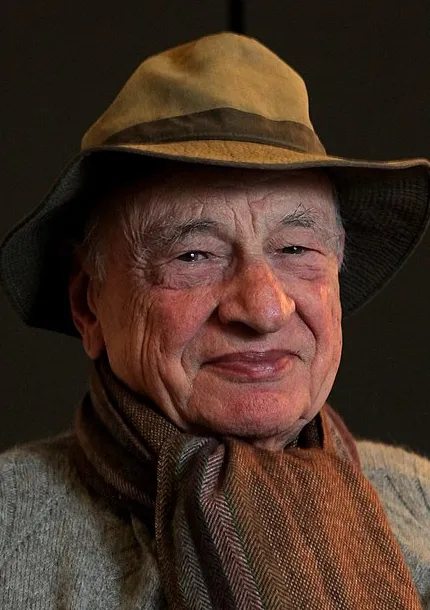
Method and Purpose
Edgar Morin’s work provides the Forum’s principal intellectual method.
Complex thought reconnects knowledge, places it in context and remains attentive to interdependence, uncertainty and the relationship between parts and wholes.
Developed by the Forum through its reading of Morin, Planetary Humanism provides the ethical horizon: dignity, plurality, shared planetary belonging and responsibility.
Foundational Architecture
Memory, method, technology and purpose work together across the Forum.
Historical inspiration and memory
The House of Wisdom of Baghdad evokes a formative period of translation, inquiry and circulation of knowledge across cultures, languages and intellectual traditions.
Intellectual method
A method for reconnecting knowledge and understanding context, interdependence, uncertainty and the relationship between parts and wholes.
Contemporary technological tool
A current, subordinate and replaceable tool for organizing and navigating knowledge under human stewardship.
Ethical horizon and purpose
An orientation toward dignity, plurality, shared planetary belonging and responsibility. It directs and limits how the other ingredients are used.
The problem
Institutional response
Four foundational ingredients
Knowledge Center
People and institutions
Responsibility remains human and contextual.
Experience, evidence and consequences may return as feedback and correction.
The Knowledge Center
The Knowledge Center is the Forum’s knowledge-navigation infrastructure. Inspired by complex thought, it connects sources, disciplines, cultures, timelines, geographies and comparisons so that relationships become visible and complexity can be explored without being reduced.
Artificial intelligence supports exploration; evidence, scholarship, interdisciplinary inquiry and accountable human judgment remain essential.
Current Platform
The first public implementation: comparative, contextual and source-transparent.
Explore Understanding Religions →Current Platform
Questions, traditions, concepts and thinkers explored across cultures and civilizations.
Explore the Current Platform →Under Development
Events, structures, continuities and change across time.
Explore the Roadmap →Under Development
Encounters, exchanges and transformations across civilizations.
Explore the Roadmap →Under Development
Economic systems, institutions, incentives and their human consequences.
Explore the Roadmap →Under Development
Climate, ecosystems and planetary interdependence.
Explore the Roadmap →Under Development
Power, institutions, public choices and collective life.
Explore the Roadmap →Under Development
Power, geography, strategic interests and relationships among states, regions and global systems.
Explore the Roadmap →Under Development
Ideas, traditions of thought and the institutions through which societies govern.
Explore the Roadmap →Under Development
A dedicated knowledge environment for complex thought and Edgar Morin’s intellectual legacy.
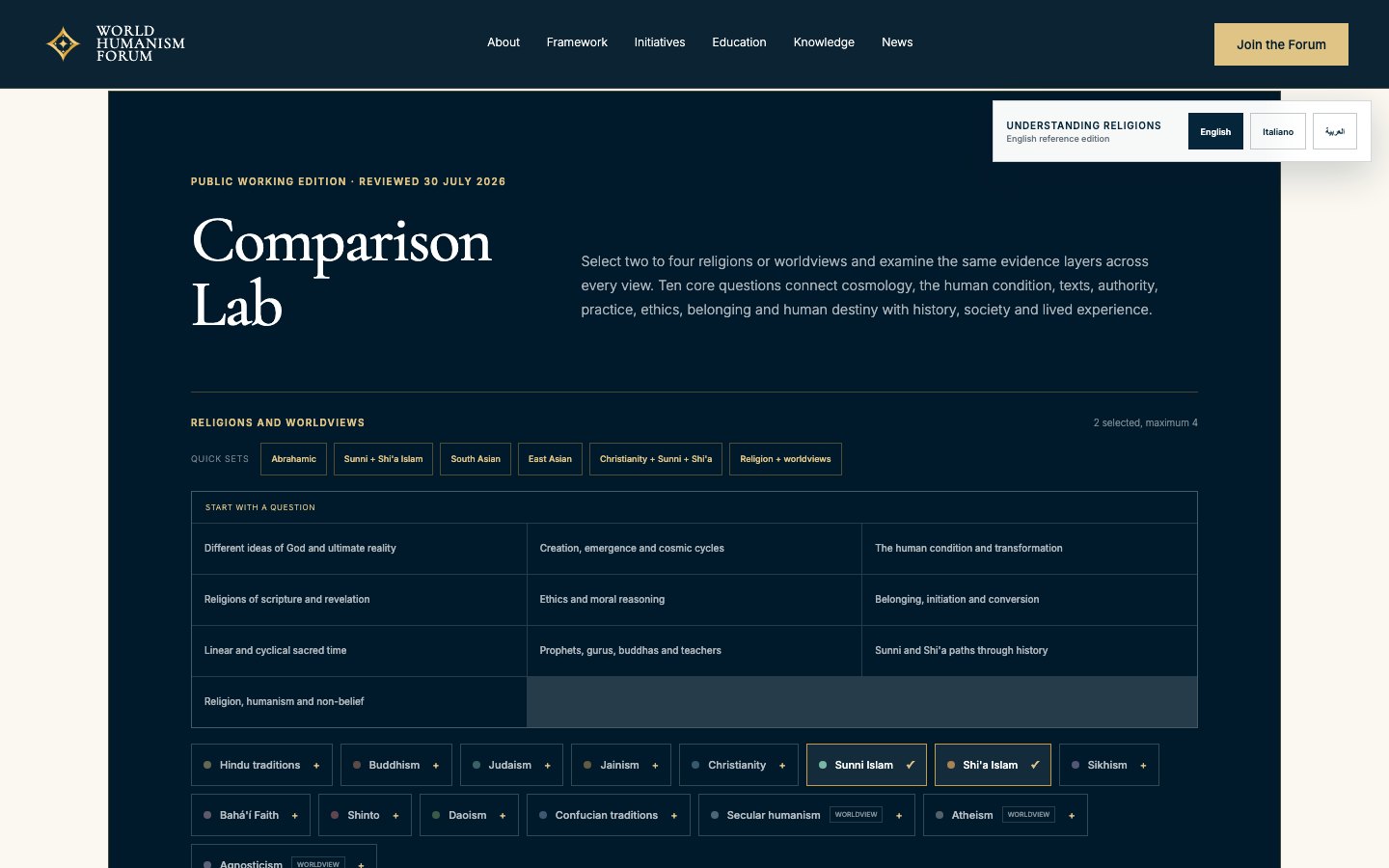
Explore the Roadmap →First Public Implementation of the Knowledge Center
A comparative, source-transparent environment for exploring how religious and non-religious worldviews understand reality, human life and society.
Explore fifteen independent profiles through shared questions, timelines, everyday and public life, dialogue and visible sources. Every comparison states its limits.
Work in Progress · Open to Contribution
Convening & Culture
Contemporary Bayt al-Hikma is the Forum’s convening and cultural component, bringing people, disciplines, generations and traditions into encounter.
Grounded in historical memory, it creates space for dialogue, translation, cultural expression and collective inquiry without erasing difference or conflict.
Encounters That Shaped the Journey
A selective record of conversations that informed the Forum’s intellectual journey. Inclusion does not imply endorsement, partnership or participation.
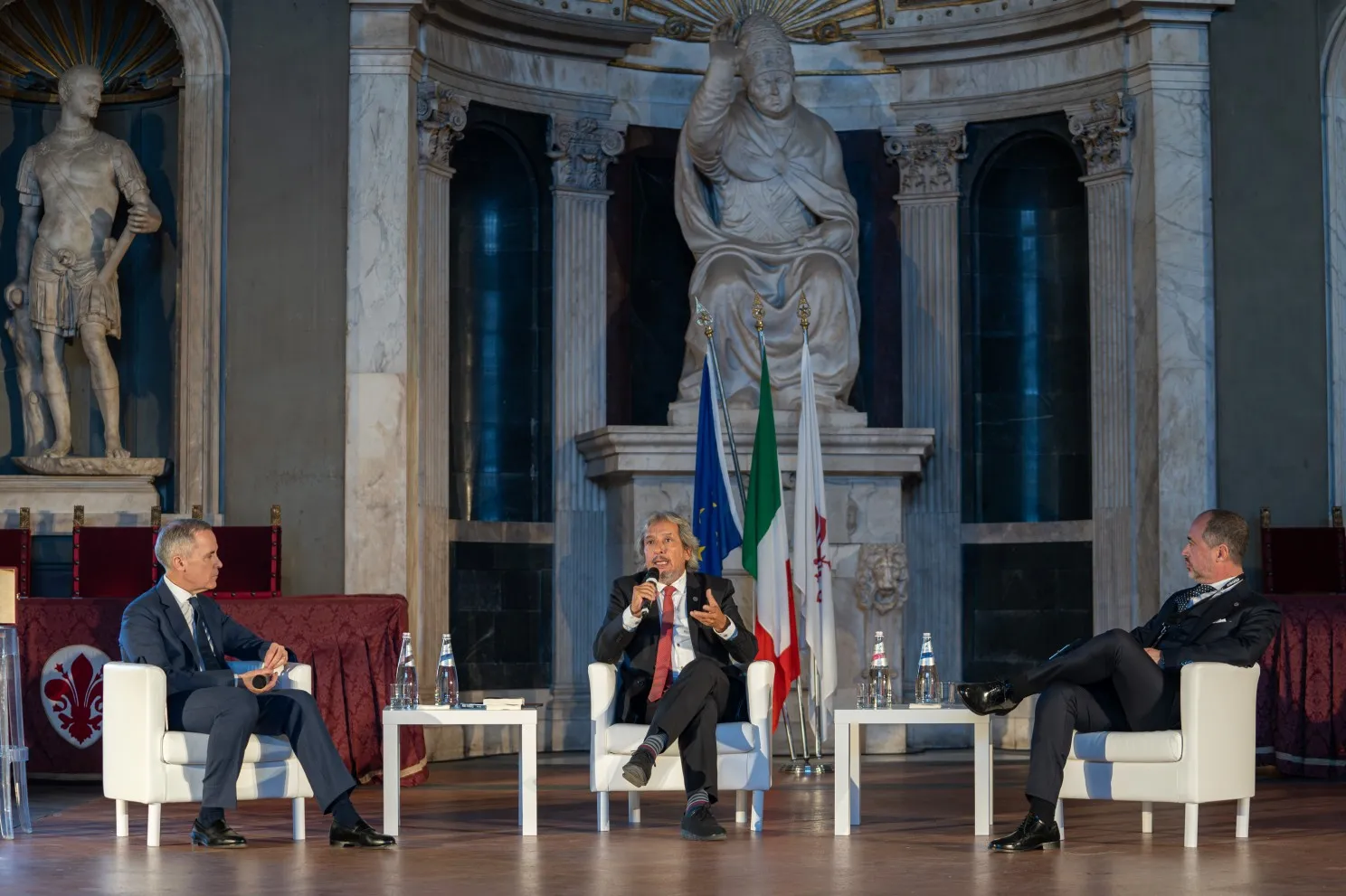
Documented dialogue · Florence
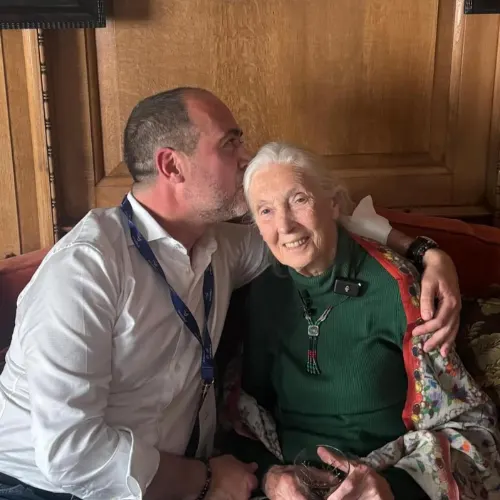
Documented encounter
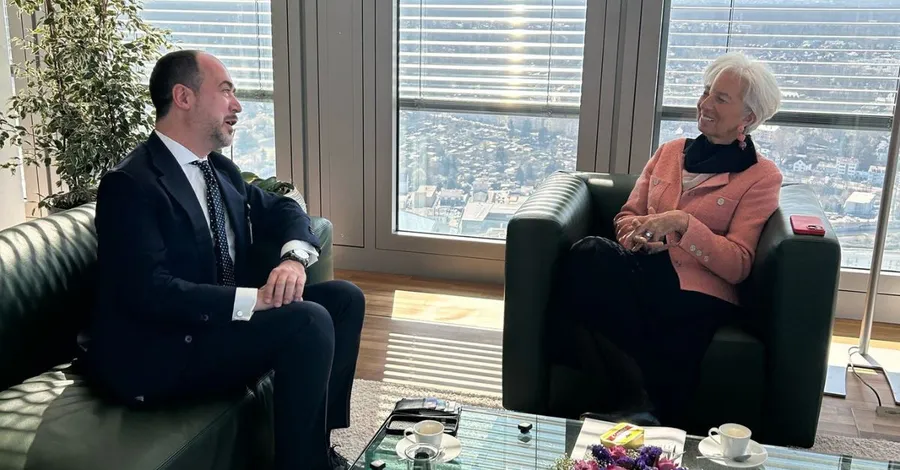
Documented conversation
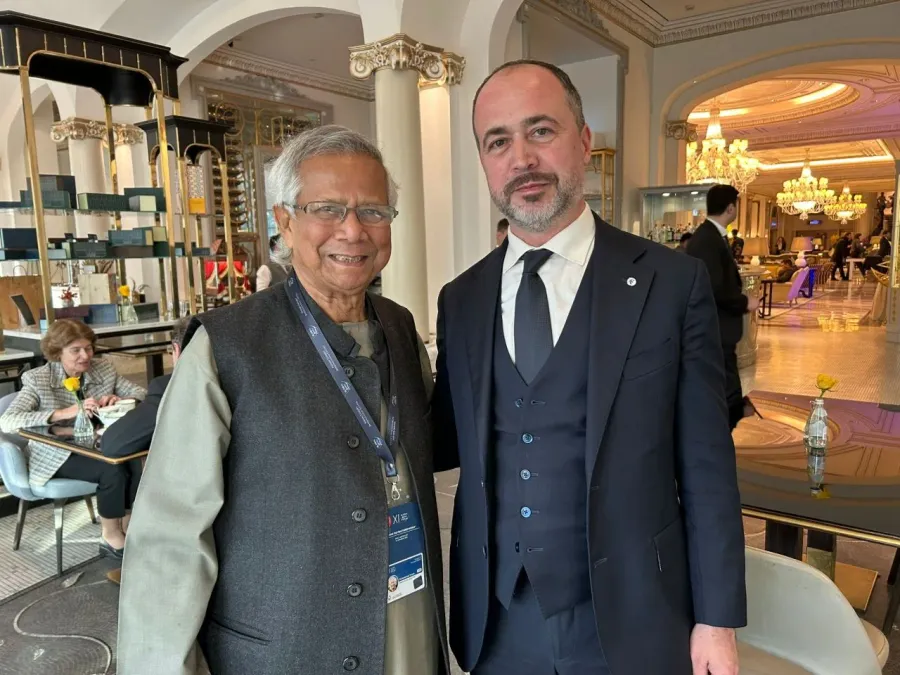
Documented encounter
Intellectual inspiration · public portrait
Initiatives & Practice
The Forum connects knowledge and experience to make complexity more understandable and navigable. It helps people and institutions examine relationships, assumptions and consequences before deciding how to act.
People and institutions retain responsibility for their decisions and actions. The Humanistic Transformation Framework supports the design, learning and evaluation of initiatives in their own contexts.
Connect knowledge, dialogue and reflection to strengthen judgment and responsibility. Learning is designed to reveal relationships across disciplines, cultures and lived experience.
Help institutions examine assumptions, relationships and consequences across professional boundaries. Shared inquiry supports more reflective learning across roles and sectors.
Map interdependencies, identify leverage points and test responses in context. The aim is to make complex relationships more visible before action is taken.
Develop explicit theories of change, evidence plans and cycles of adaptation. Assumptions, responsibilities and learning questions remain visible throughout the work.
Stewardship & Public Purpose
The World Humanism Forum was conceived and initially funded by Claudio Pedretti, who serves as its founder and steward. Horizon Strategies is its current strategic and technical development partner.
The Forum is being developed in the public interest. It is designed to complement, not compete with, universities, foundations, research centres, cultural institutions, international organisations and public bodies.
Its contribution is a method, knowledge-navigation tools and convening capacity that partners can test, adapt and strengthen within their own mandates and contexts. Decisions and actions remain the autonomous responsibility of the people and institutions involved.